
The Power of Solar: How to Get the Most From Your Solar Panels.
There is a huge focus on renewable energy, particularly for businesses with large environmental footprints. Because of this, many consumers are increasingly interested in solar solutions for agricultural activities such as cooling, heating, irrigation, security systems and more. As a business owner, it’s important to understand how solar power can benefit your operation — and how you can maximize its potential.
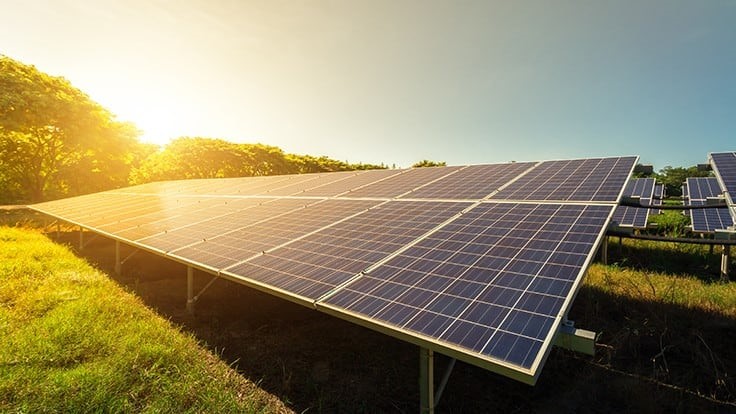
Solar power provides opportunities for agriculture to be more sustainable, which is vital to meeting the needs of a growing population and protecting the planet from climate change’s worst effects!
“Find out how solar power can help you increase crop yields.”
Solar technology has been proven to be a great way to protect crops from harsh winters. For example, it’s been shown that tomatoes grown under solar panels have a higher level of Vitamin C than other tomatoes. Every year farmers strive to grow as many bushels of tomatoes as possible to supply local markets with fresh produce, and the easiest way to do this is by growing them outdoors. However, large farms often lease additional land to solar farmers, so those farmers can grow their crops on the farm and provide jobs for their unemployed neighbors. The on-site solar panels collect the suns energy, capture moisture from the soil, and convert it to electricity. The electricity supplies farm equipment and heating and cooling systems, and once its all done, the farmers get their tomatoes, too. Another example is a loophole in the California Solar Choice Act (California Regs. Title 15 Sec. 5112). If you’re growing to export to other states, you have to provide your produce to consumers on a CSA basis. Essentially, the farmer is subsidizing his neighbors’ CSA members by providing them additional produce that’s grown in their designated plots. This loophole exists because large farms can lease land on very large structures, which are called Concentrated Self-Storage facilities. These large facilities generally have a 500-acre footprint and a staff of between 5 and 20 people. Put it all together behind a gate, and we are talking about a lot of tomatoes. Because of the massive wealth generated by large farms around the country, these farms buy up acres of land and build these storage facilities. So that leaves a lot of land that would otherwise be used to grow tomatoes. There are a number of strategies to harvest the excess crops and convert them into other commodity crops.
Discover how solar panels can keep livestock warm, healthy and productive all year long.
The United States is a country of extremes. Temperatures in many parts of the country can fluctuate drastically from day to day or even hour to hour. During the cold winter months, you can find yourself fighting to keep livestock healthy and productive. The same is true in the summer months when animals are susceptible to heat stress. During the past few days, California’s extreme heat has shot up into the 90’s nearly everywhere. It has even led to wildfires that are destroying an historic number of trees, dwarfing their size even in places where they should be thriving. Wildfires are not only devastating but they are also gumming up the works on our agricultural crops. Given our exposure to hot weather and the drought, many farmers have turned to a relatively new form of solution: hydroponics, or the use of humidity-controlled water plants. With less need for pesticides and fertilizers, hydroponics help plants become more robust and drought resistant. Crop yields used to be dismal, but farmers who adopt this technology say it is now possible to plant 1 ton of food per acre, up from about half that. Over time, they say, it will allow farmers to produce more food at lower costs. Hydroponics does have its flaws, however. Most crops do not like extreme temperatures. Even our classic indoor lettuce and cabbage plants, which do really well in long sitings and humidity, fail when placed in “ultra” conditions, especially when turning the water flow on and off crazily. Many hydroponic systems flood and fail to properly distribute nutrients, leading to greater than normal amounts of algae growing on the leaves. Given the fact that crops also require light to survive, it soon becomes apparent that hydroponics will likely remain a fringe form of farming for a while. Despite these challenges, California, as well as many other states, are turning to hydroponics. With much of the United States in a state of emergency, especially in California, many are looking for new solutions to fix the myriad problems stemming from uncontrolled wildfires.
Discover the benefits of using solar power for irrigation and drainage in agriculture
Solar powered irrigation systems can help farmers produce a lot more food simply by using the sun’s energy. Solar powered water pumping systems can be used to irrigate crops and water livestock, and solar powered irrigation systems are even used to irrigate golf courses. Solar powered irrigation systems are also highly effective at drainage, which can help prevent flooding. As most of us already know, back in the early 1980’s I had a brush with “The Plague” almost directly as my family was going through a major house move. For some reason, our plumbing wasn’t connected properly to the household water main inside our new house, which led to constant flooding in our basement when rain came through. We didn’t have the money to hire a contractor to fix the problem, and despite spending days doing nothing but standing waist deep in water in our basement, we had to leave the house through the back door when the water stopped coming out! Since then I’ve learned a lot about water and how we neglect it even after most of us are allegedly “out of the woods”. However, I’ve also learned that while most residential problems can be fixed fairly quickly, if our water system is out of alignment then it can be very difficult to effectively control our land. Thankfully as our land uses have changed, so has the access to water. Now, we live in a region that has more abundant water than our pre-Covid years, so most of our cropland (grasslands) are only semi-arid. This means more sunlight to grow food. Because of this, we can afford to pump less water from our nearby rivers, lakes, springs or other underground water sources. If we take advantage of this fact, our crops and livestock can survive without the need to water them as aggressively. We also aren’t dependent on the larger irrigation systems found in larger towns and cities. Most people view irrigation as a questionable way to grow food. A lot of the time it is, but the best way to grow food is to regularly water it.